The Emperor’s Private Key
Rice, Shinto, and the “OS of Cycles”
If wheat—the bread that commands the Western table—is a symbol of “addition” and “conquest,” won by humans clearing the wilderness and bending nature to their will…
What, then, is Japan’s “rice”?
It is an amulet for bowing before a formidable nature, subtracting our egos, and achieving “synchronicity” with the yaoyorozu no kami (the eight million deities).
It is, in essence, the “medium of prayer” that boots up the spiritual operating system of the Japanese people.
Act I:
The Mud and Sweat of the Commons
The Paddy Field as an Ego Force-Quit
Wheat can be sown on dry earth and harvested through individual labor.
Wet-rice cultivation (suiden), however, demands a completely different paradigm.
The water trickling down from the mountains must be shared with absolute equity across the entire village.
Unless the backbreaking labor of transplanting and harvesting is performed in perfect unison by every villager, the autumn harvest will never come.
This highly sophisticated agricultural infrastructure naturally “debugged” individual greed and self-interest.
In its place, it installed the code of Wa (harmony)—a shared, collective breathing—deeply into the DNA of the Japanese people.
To be caked in mud, bending at the waist alongside neighbors to plant tender shoots, requires no arrogance of subduing nature with brute force (Gō).
There is only the resilient spirit of receptive grace, tuning one’s physical form to the grand cadence of the cosmos.
Act II:
The Sovereign Without Swords
The Pure Software of the Sacred Hermit
The ultimate mystery of the Japanese state is this:
How has the Emperor remained the nation’s supreme authority—the “source code of sovereignty”—for over 1,500 years, despite possessing absolutely no military hardware?
There are no grand stone fortresses in Kyoto, no standing armies to enforce his command, and no heavy armor to protect his flesh.
The Emperor is a sovereign who has voluntarily and completely subtracted physical power (Gō).
His ultimate duty is not political administration or the management of worldly conflicts.
It is saishi
—the meticulous maintenance of the nation’s spiritual infrastructure.
Every spring, the Emperor personally plants seedlings in the sacred soil;
every autumn, he offers the first-fruits to the deities.
By remaining entirely “powerless” in the worldly sense, the Emperor became invulnerable.
Because he plays no part in the violent game of physical supremacy, his authority could never be won or lost on a battlefield.
He does not rule by the sword;
he exists as a sacred, disarmed conduit, utilizing the quiet, regenerative power of Shinto to synchronize the human realm with the cosmic cycle.
Act III:
Breaking the Blade
How the Economy of Rice Hostaged the Shogunates
From the Kamakura period onward, military regimes from Minamoto no Yoritomo to Tokugawa Ieyasu seized complete control of Japan’s physical steering wheel.
Yet, despite possessing absolute monopoly over violence (Gō / hardware), not a single Shogun ever dared to destroy the Emperor.
Why did the sword always bow to the powerless priest?
Because the warriors themselves were entirely governed by a survival operating system they could not control: Rice.
Kokudaka (石高)
In Japan, the metric of wealth and power was not gold, silver, or land area, but kokudaka
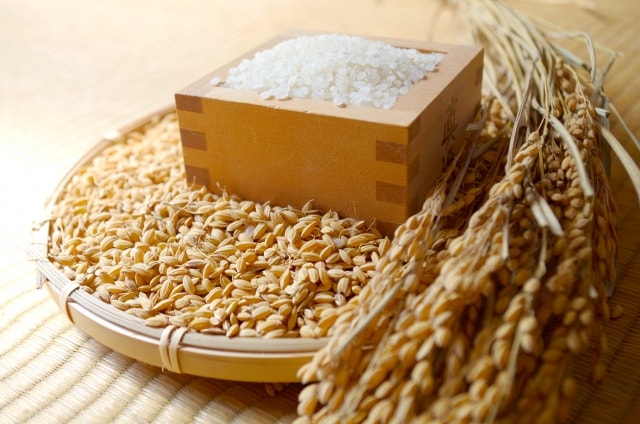
—the measured yield of rice.
Rice was the state’s absolute reserve currency, the very energy that fed the samurai and stabilized the economy.
No matter how sharp their blades or how impregnable their castles, the warriors could not command the clouds, the rain, or the soil.
To prevent the systemic collapse, the warlords desperately needed a license of cosmic legitimacy.
They had to submit to the only being in Japan authorized to interface with Amaterasu Omikami (the Sun Goddess) to guarantee a bountiful harvest.
Thus, the sharp iron blade of raw power was held hostage by the golden, bowing stalk of rice
—a beautifully sophisticated system of dual governance, where physical force was subtly subdued by the spiritual custodian of the soil.
Act IV:
Niiname-sai and Daijō-sai
Niiname-sai:
The Annual Soul Update
The ritual that epitomizes the Emperor’s source of power is the Niiname-sai (Festival of the New Harvest), held annually on November 23rd.
The Niiname-sai is the most sacred of all imperial rites.
The Emperor offers the year’s freshly harvested rice to the deities, then dines on it with them in holy communion.
By sharing this sacrament, the Emperor renews his inner spiritual force—the inadama (the soul of rice)—and reboots the nation’s spiritual OS.
Daijō-sai:
The Once-in-a-Lifetime Private Key
And then, there is the ultimate version of this rite, performed only once in a reign upon an Emperor’s accession:
the Daijō-sai (The Great Thanksgiving Festival).
This is no Western coronation.
There is no gleaming cathedral, no public display of a crown, no “protocol of addition.”
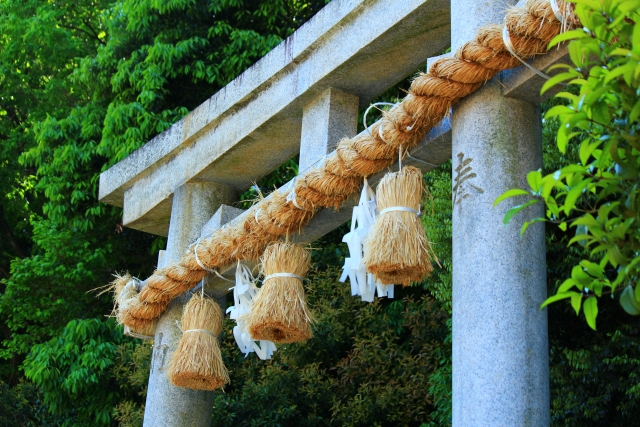
Instead, the Emperor enters a simple, rustic structure of unpainted cypress and thatch—the Daijō-kyū, built solely for this night—completely alone.
In absolute darkness, he offers the first-fruits of the rice harvest to Amaterasu Omikami, and partakes of it with her.
The Ultimate Impermanence
And astonishingly, the moment the ritual concludes, this sacred palace is immediately dismantled and burnt, leaving not a trace behind.
This is a “black box” of absolute secrecy.
By rejecting permanent stone temples in favor of a structure that vanishes overnight, Shinto embraces the ultimate impermanence
—the aesthetics of subtraction.
Here lies the deepest “private key” of Japanese culture, fully synchronized with the Three Sacred Treasures and Sen no Rikyū’s rustic teahouses.
Act V:
Fermentation and Compression
Rice is far more than mere calories.
It is an alchemical substance, transmuting into highly sophisticated spiritual software.
The Alchemy of Sake:
Liquid Purification, Capsule of Time
Brewed through the union of rice, water, and the invisible operations of the kōji mold, sake is a liquid art yielded to the natural mystery of fermentation
—a phenomenon beyond human control.
Offered at every Shinto altar, this pristine liquid serves as a purification interface, connecting the human and the divine while washing away the impurities (kegare) of the mundane world.
The Alchemy Mochi:
The Physical Compression of Inadama
Pounded and compressed into a dense, viscous mass, mochi represents the concentration of the rice soul.
Ancient Japanese believed this white, round form encapsulated the sacred inadama (the soul of rice).
The Kagami Mochi displayed at New Year is not mere food, but a spiritual battery
—a vessel (yorishiro) designed to download and install divine vital energy into the human body.
Act VI:
Itadakimasu
The Daily Reboot of Existence
Before every meal, Japanese people clasp their hands and whisper a single word:
Itadakimasu.
This is leagues apart from “Bon appétit” or “Enjoy your meal.”
Itadakimasu literally means “I humbly receive upon my crown” (the peak of one’s head).
It is a declaration of ultimate humility and gratitude:
“To sustain my own life, I lift up and accept the life of the deity dwelling within this rice,
and thus, the very life of nature itself.”
Every time we cradle a bowl of rice, we synchronize with the sweat of nameless ancestors spanning millennia, a profound awe of nature, and a quiet dialogue with the divine.